Is Buying Property in Baner Worth It in 2026?
Quick links
ROI, Rental Yield & Risk Analysis (Expanded Authority Version). This is the expanded, long-form version. Think of it as a decision document, not a blog post. If someone reads this fully and still contacts you, they are not browsing—they are ready. For the full process, see our complete guide to buying property in Baner.
1. Why "Is Baner Worth It?" Is the Right Question in 2026
In earlier cycles, buyers asked:
- "Where will prices rise fastest?"
- "Which area is upcoming?"
In 2026, the smarter question is:
"Where will my capital be safest while still growing?"
Why this shift matters:
- Real estate prices across Pune have repriced upward permanently
- Interest rates are no longer artificially low
- Buyers have less tolerance for long holding periods without returns
- Exit liquidity matters more than entry excitement
Baner sits exactly at this intersection: Not cheap. Not speculative. Not volatile. Which is why it divides opinion.
2. Baner's Market Position in 2026: Mature, Not Saturated
A common misconception is that mature = exhausted. That's false.
Baner is mature, meaning:
- Core infrastructure already exists
- Demand is stable and recurring
- Prices move with fundamentals, not hype
But Baner is not saturated because:
- Land supply is finite and constrained
- Redevelopment is selective, not chaotic
- Buyer profile keeps upgrading
Key distinction: Saturated markets stagnate. Mature markets compound slowly but consistently. This is why Baner behaves differently from fringe growth corridors.
3. Demand Quality in Baner: Why It Matters More Than Demand Quantity
Real estate does not crash because of low prices. It crashes because of weak buyers.
Baner's buyer base in 2026 is dominated by:
- Senior IT professionals working near Hinjewadi IT Park
- Startup founders and business owners
- Dual-income households with long holding capacity
These buyers:
- Do not panic sell
- Are less dependent on leverage
- Absorb inventory steadily
This buyer resilience is why Baner did not see distress even when other areas froze.
4. Price Reality: Expensive, Yes — Fragile, No
Let's address the uncomfortable truth.
Baner prices are high because:
- It solves both work proximity and lifestyle
- Comparable alternatives are either farther or less livable
- Buyers are paying for certainty
What Baner prices are not based on:
- Future IT announcements
- Metro speculation alone
- Artificial scarcity tactics
This is important because: Prices driven by real usage fall slowly, if at all. Baner's risk is overpayment, not collapse.
5. Rental Yield: Why Baner Performs Better Than It Looks on Paper
On spreadsheets, Baner's rental yield appears average. But spreadsheets ignore:
- Vacancy duration
- Tenant reliability
- Rent continuity during downturns
In Baner:
- Vacancies are shorter
- Tenant churn is predictable
- Rental demand does not disappear during slow cycles
This makes Baner a defensive rental market.
Smart investors prefer: 3% yield with zero vacancy over 5% yield with long empty periods.
6. ROI in Baner vs "Upcoming" Locations: Risk-Adjusted Truth
Many buyers compare Baner with: Wakad, Bavdhan, Peripheral Hinjewadi, Future growth corridors. The comparison is flawed unless risk is adjusted.
Baner offers:
- Lower upside
- Much lower downside
- Faster exit liquidity
Emerging areas offer:
- Higher theoretical upside
- Higher execution risk
- Slower resale
2026 reality: Risk-adjusted ROI favors Baner for buyers who cannot afford mistakes. For area-wise price bands, see Baner property prices 2026.
7. The Hidden Strength: Liquidity During Bad Markets
Liquidity is not tested in bull markets. It is tested when things go wrong.
In downcycles:
- End-user markets trade
- Investor-only markets freeze
Baner trades because:
- Families still move
- Jobs still require relocation
- Rentals still function
Liquidity is Baner's unseen premium.
8. What Can Actually Go Wrong in Baner (Real Risks)
Let's be precise.
Baner-specific risks are:
- Buying the wrong micro-location
- Overpaying for lifestyle adjacency
- Choosing dense, maintenance-heavy societies
- Confusing builder marketing with execution quality
What is NOT a major risk:
- Market crash
- Demand disappearance
- Legal mass failures
This clarity matters: Baner punishes bad decisions, not bad timing. To avoid common errors, read common mistakes when buying in Baner.
9. Financial Stress Test: Can You Hold Baner Comfortably?
Baner is unforgiving to overstretched buyers.
Ask honestly:
- Can you service EMI without bonuses?
- Can you hold for 7–10 years if needed?
- Can you absorb maintenance increases?
If yes → Baner works extremely well.
If no → Baner becomes psychologically stressful.
This is why Baner suits financially stable buyers, not aggressive speculators.
10. Scenario Analysis (2026–2035): What Outcomes Look Like
Base Case (Most Likely)
- Moderate price appreciation
- Rentals track inflation
- Capital preserved with growth
Best Case
- Infrastructure upgrades improve mobility
- Premium societies outperform averages
- Strong resale demand continues
Worst Case
- Price stagnation
- Maintenance rises faster than rent
- Resale takes longer, not cheaper
Notice again: Downside is time, not value destruction.
11. Final, Unbiased Verdict
Buying property in Baner in 2026 is worth it if:
- You value stability over excitement
- You are an end-user or long-term holder
- You buy correctly, not emotionally
- You respect the market's maturity
It is not worth it if:
- You want fast appreciation
- You are stretching finances
- You are chasing "next big thing" returns
Baner is no longer a gamble. It is a strategy.
12. The Question Smart Buyers Ask Next
Not: "Should I buy in Baner?"
But: "Which part of Baner, at what price, with what exit plan?"
That question separates buyers from winners.
Advisory Close (Positioning, Not Selling)
If you're evaluating Baner seriously, get guidance from someone who:
- Works daily in Baner
- Understands micro-location pricing
- Can tell you where not to buy
Because in 2026, not buying the wrong property is more important than buying the right one.
Featured Properties in Baner
Related Articles
Baner Property Investment Tips 2024
Expert tips and strategies for investing in Baner real estate. Learn about price trends, ROI, and best investment options.
Baner vs Balewadi: Where Should You Invest in 2026?
Analytical comparison of Baner vs Balewadi for 2026: market maturity, prices, rental yield, infra, risks, and who each micro-market is right for.
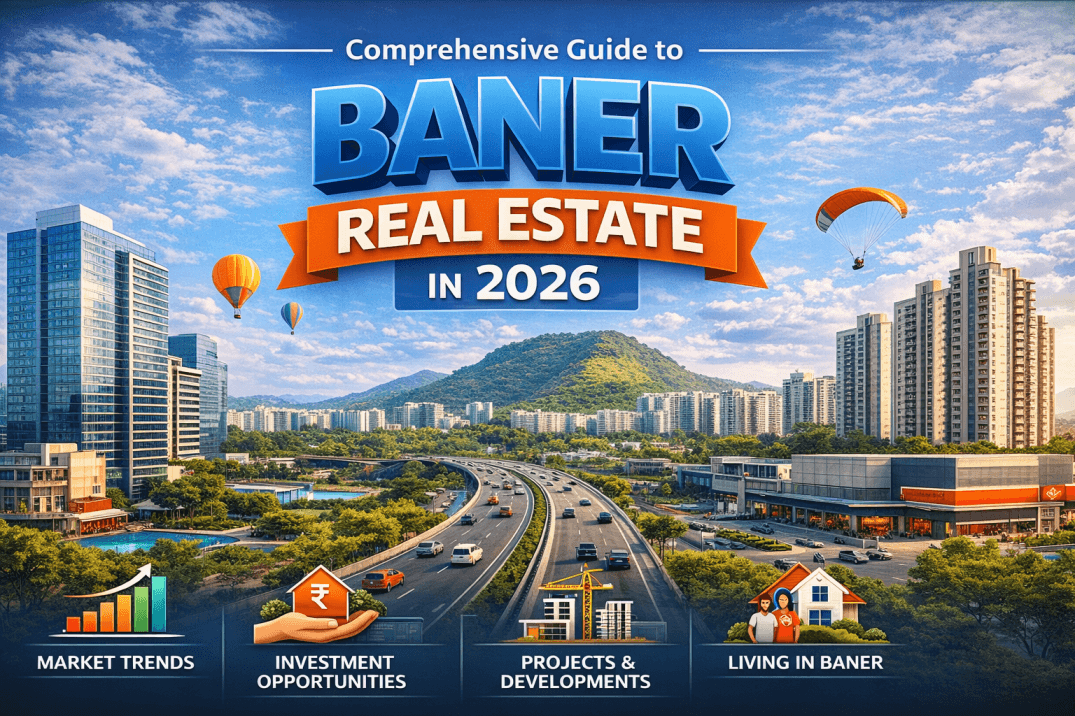
The Complete Guide to Property in Baner, Pune 2026: Investment, Living & Future Outlook
The definitive guide to Baner real estate in 2026. Updated price trends, top residential projects, rental yields, infrastructure status, metro updates, and expert buying tips for investors and homeowners.
Explore Baner
Helpful Resources
Frequently Asked Questions
- Is Baner a good area to buy property in 2026?
- Yes. Baner is a mature, premium residential market in West Pune with stable demand, strong rental absorption, and exit liquidity. It suits end-users and long-term holders who value stability over speculative upside.
- Is Baner overpriced compared to other Pune areas?
- Baner is expensive but justification-driven: it solves work proximity and lifestyle in one location. Comparable alternatives are either farther or less livable. The risk is overpayment for the wrong micro-location, not market-level overpricing.
- Is Baner better for end-users or investors?
- Baner favours end-users and long-term holders. Demand is dominated by senior IT professionals, dual-income households, and business owners who do not panic sell. Risk-adjusted ROI favours Baner for buyers who cannot afford mistakes; it is not ideal for aggressive short-term speculation.
- What is the biggest risk of buying property in Baner?
- The main risks are buying the wrong micro-location, overpaying for lifestyle adjacency, choosing dense or maintenance-heavy societies, and confusing builder marketing with execution quality. Market crash or demand disappearance is not the primary risk—Baner punishes bad decisions, not bad timing.
Interested in Baner Properties?
Get expert consultation and site visit assistance from Baner Property.